Sale Price:
$85.00
Original Price:
$750.00
Gold-inlaid mandala print crafted by holy monks — a sacred artifact for yogis and lovers of ancient wisdom. This exquisite print radiates devotional energy and supports a spiritual progression: from celebrating the cleansing power of chanting the Hare Krishna mantra to cultivating profound humility, renunciation of material desires, and intense longing for Krishna.
Features:
Handcrafted design by practicing monks, preserving traditional iconography and reverent intention.
Gold inlay detail that captures light and draws focus for meditation and devotional practice.
Printed on archival-quality paper for durability and lasting beauty.
Ideal size for home altars, meditation spaces, or as a meaningful gift for practitioners.
Perfect for spiritual seekers who value authenticity, devotional practice, and objects made with mindful intent.
Symbolism in This Mandala
1. Central Deity: Hevajra in Union (Yab-Yum)
Hevajra is a wrathful-yet-compassionate tantric deity whose fierce appearance represents the power to cut through ignorance and obstacles.
Eight faces, sixteen arms: mastery over directions and cosmic forces
Consort (Nairatmya): symbolizes union of wisdom and method, the complete path to enlightenment
2. The Geometric Palace
The square palace with four gateways is typical of Vajrayana mandalas:
Square = stability and the perfected mind
Four gates = compassion in all directions
Inner circles = layers of realization and protection
This “palace” is where the meditator visualizes entering during advanced tantric practice.
3. Outer Rings
Often representing:
Fire ring – burning away delusion
Vajra ring – indestructibility of awakened mind
Lotus ring – purity
Cremation ground scenes (seen around the perimeter) – reminder of impermanence, and the transformation of death into liberation
4. Protective Deities & Animals (Corners and Borders)
Your print includes mythical animals, guardians, and enlightened beings. These traditionally symbolize:
Protection of sacred knowledge
Overcoming internal and external obstacles
The presence of awakened energy around the practitioner
5. Upper Figures (Buddhas / Teachers)
The calm figures at the top represent lineage masters or Buddhas of the three times—symbolizing that the mandala is rooted in authentic tradition and has a transmission lineage.
Why This Mandala Is Especially Important
The Hevajra system is unique because it integrates:
It’s also the tantra most often publicly taught by the Dalai Lama.
Gold-inlaid mandala print crafted by holy monks — a sacred artifact for yogis and lovers of ancient wisdom. This exquisite print radiates devotional energy and supports a spiritual progression: from celebrating the cleansing power of chanting the Hare Krishna mantra to cultivating profound humility, renunciation of material desires, and intense longing for Krishna.
Features:
Handcrafted design by practicing monks, preserving traditional iconography and reverent intention.
Gold inlay detail that captures light and draws focus for meditation and devotional practice.
Printed on archival-quality paper for durability and lasting beauty.
Ideal size for home altars, meditation spaces, or as a meaningful gift for practitioners.
Perfect for spiritual seekers who value authenticity, devotional practice, and objects made with mindful intent.
Symbolism in This Mandala
1. Central Deity: Hevajra in Union (Yab-Yum)
Hevajra is a wrathful-yet-compassionate tantric deity whose fierce appearance represents the power to cut through ignorance and obstacles.
Eight faces, sixteen arms: mastery over directions and cosmic forces
Consort (Nairatmya): symbolizes union of wisdom and method, the complete path to enlightenment
2. The Geometric Palace
The square palace with four gateways is typical of Vajrayana mandalas:
Square = stability and the perfected mind
Four gates = compassion in all directions
Inner circles = layers of realization and protection
This “palace” is where the meditator visualizes entering during advanced tantric practice.
3. Outer Rings
Often representing:
Fire ring – burning away delusion
Vajra ring – indestructibility of awakened mind
Lotus ring – purity
Cremation ground scenes (seen around the perimeter) – reminder of impermanence, and the transformation of death into liberation
4. Protective Deities & Animals (Corners and Borders)
Your print includes mythical animals, guardians, and enlightened beings. These traditionally symbolize:
Protection of sacred knowledge
Overcoming internal and external obstacles
The presence of awakened energy around the practitioner
5. Upper Figures (Buddhas / Teachers)
The calm figures at the top represent lineage masters or Buddhas of the three times—symbolizing that the mandala is rooted in authentic tradition and has a transmission lineage.
Why This Mandala Is Especially Important
The Hevajra system is unique because it integrates:
It’s also the tantra most often publicly taught by the Dalai Lama.

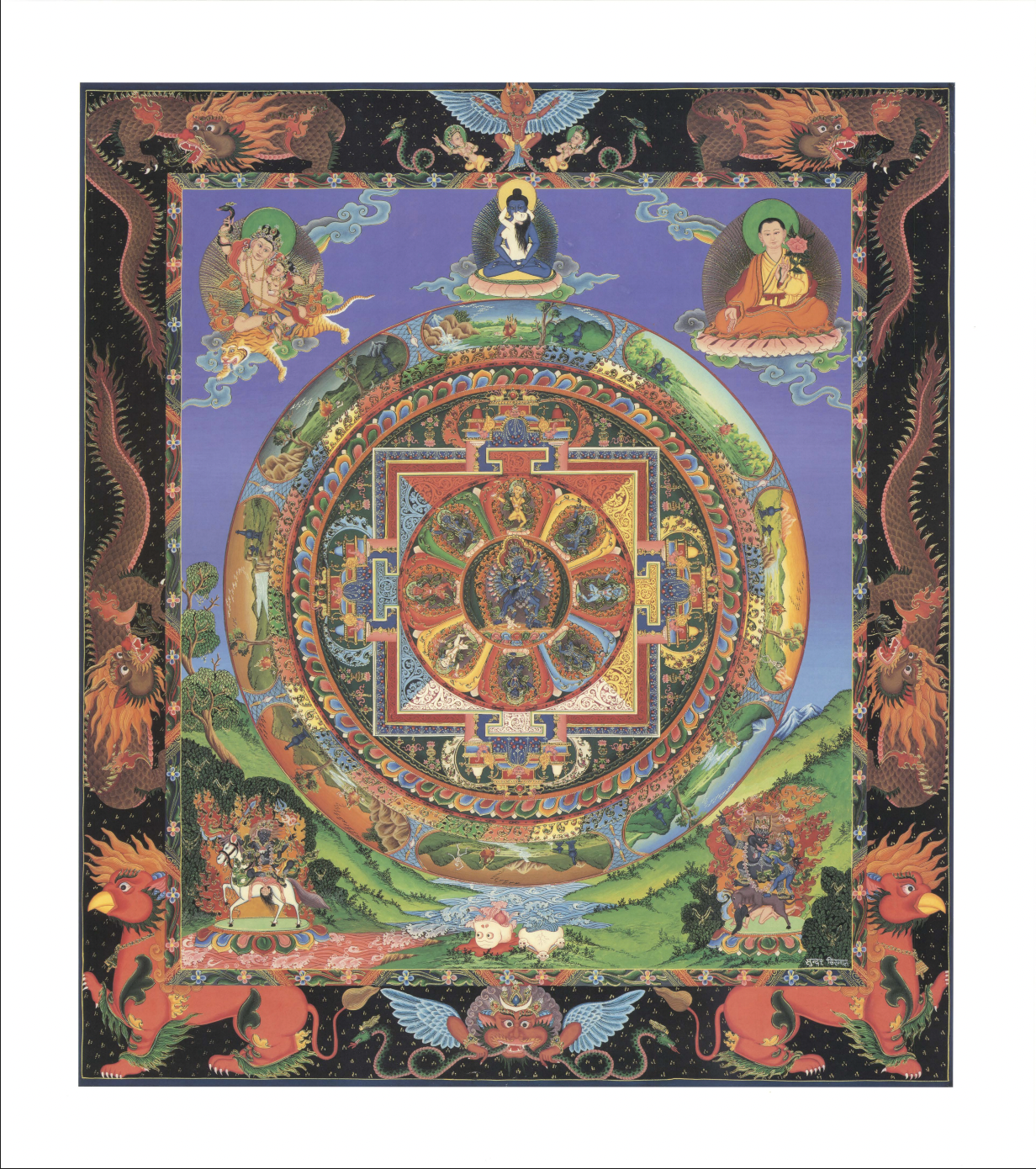 Image 1 of 1